Expenses in a Real Estate transaction
In all real estate transactions, there are costs in addition to the price and taxes. If the buyer or seller are not properly advised, these additional costs can become a problem.
These expenses are mainly paid by the buyer. Generally, it is considered that, between taxes and common expenses, the buyer must add an amount between 10% and 15% to the total purchase value. This value is approximate and may vary, especially depending on the location of the property.
So who pays the expenses and taxes in real estate transactions?
It must be taken into account that Spanish law regulates who is responsible for paying the expenses and taxes. Although, in some cases it may be agreed differently.

The payment of expenses and taxes is generally divided as follows:
BUYER
Expenses: Notary, Registration of the sale and purchase in the Land Registry, Gestoría, others.
Taxes: Value added tax VAT (Impuesto sobre el Valor Añadido IVA) or transfer tax ITP (Impuesto sobre transmisiones patrimoniales). Tax on Documented Legal Acts IAJD (Impuesto sobre actos jurídicos documentados).
SELLER
Expenses: cancellation of mortgage charges and other notary expenses prior to purchase. Real estate commission, sometimes they try to charge it to both parties.
Taxes: Municipal Capital Gains Tax (Plusvalía Municipal).
BANK
If the operation is made through financing (mortgage) the bank will pay: the buyer’s notary fees, the registration of the purchase-sale in the Land Registry and the Tax on Documented Legal Acts (IAJD). In other words, these are included in the mortgage expenses.
BECOME A CLIENT
Get your first informative appointment, free of charge!
Seller Expenses
The seller’s expenses, regardless of taxes, may include the following items. This is not a list applicable to all sales and may vary from case to case. The safest way to know the expenses is to study the case and make a provision of funds.
Notary expenses
These correspond to the costs of the public deed of sale, including the notary’s fees. In practice they are usually paid in full by the buyer, although the Spanish Civil Code establishes that it is the seller who must take charge of the costs of the public deed of sale. While the buyer is responsible for the first and successive copies.
However, the seller must pay, unless otherwise agreed, the expenses of cancellation of charges that the property has. Normally, this implies the expenses of cancellation of the mortgage that exists on the property. But it can be extended to other notary fees that may be required to sell the property free of encumbrances or in accordance with the law.
Required documentation
The costs of the necessary documentation of the property to make the sale, must be paid by the seller. It should be provided by the seller:
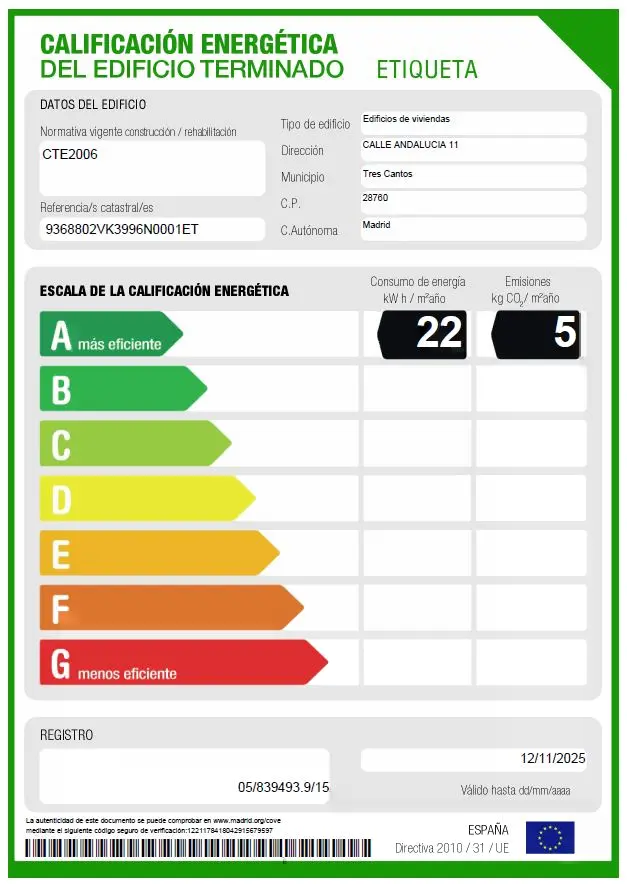
- Energy certificate: it is a requirement to deliver the document for the sale of the property. It determines the consumption of the house and the CO2 emissions that are emitted by its use. It must be done by a qualified technician and is worth approximately 120 euros.
- Certificate of habitability: it is mandatory in some Autonomous Communities in order to be able to sell the property. The document certifies that the property meets the minimum requirements to be habitable. It must be issued by a qualified architect and its cost is around 100 euros.
- Nota simple: it is a document issued by the Land Registry. It is informative and contains the characteristics of the property and, among others, if it has encumbrances. The cost is usually less than 20 euros.
Owner’s community expenses
If there is one, the seller of the property must take charge of the debts that exist with the community of owners. Normally a certificate is requested that accredits to be up to date of the debts and if it is not provided, the amount owed can be subtracted from the sale price.
Also, the seller will have to take charge of the already approved and demandable expenses that exist in the community prior to the sale.
Legal or real estate agency fees
The seller may choose to be represented by a real estate lawyer, sell on his own or through a real estate agency. On your own, the expenses are minimal, but you are not advised and that can mean incurring various liabilities. The real estate agent is usually only concerned with selling, they charge between 3% and 7%. In addition, they are increasingly trying to charge both parties, seller and buyer. This can end up being illegal. The lawyer, a good lawyer, charges between 1% and 2% depending on whether he only does advisory work or also commercial work. In the case of doing both legal and commercial work, it can be between 3% and 4%. The advantage is that the lawyer provides legal advice to the seller, which generally prevents unforeseen events from occurring. In addition, he does not have a portfolio of assets that he has to “get rid of”, but works for the client.

Other expenses
Other expenses can always arise, for example, hiring a good photographer to make a 3d video and photos of the property. But generally, we will talk about the costs of hiring an architect and/or an appraiser. For example, if you are going to buy a house or an apartment of a certain age, I will always recommend the inspection of an architect, to try to detect hidden defects. Similarly, it may be important to have an appraiser evaluate the value of the property, as well as other factors, before putting it up for sale.
When I am in charge of managing this type of actions (architect, appraiser, etc.) I always contact independent professionals duly licensed. Furthermore, I never work in such a way that there could be a conflict of interest and in this way I make sure that the professional is really working for the client.
Buyer’s Expenses
The buyer’s costs are usually higher than the seller’s costs. These expenses may include the following concepts. But the best way to know the expenses is to study the case and make a provision of funds.
Notary expenses
Legally, part of the notary’s fees for the deed of sale are attributed to the seller (only the expenses of granting the deed). But in reality, they are almost always paid by the buyer, as the agreement on who pays them is allowed. However, in regions such as Catalonia, it is stipulated that they are paid entirely by the buyer. While, in Navarra, it is paid 50% between the buyer and the seller. In any case, it is something that must be reviewed depending on the region where it is bought and that can change with the law.
Regarding the notary fees for the mortgage, the Mortgage Law establishes that they are assumed by the bank.
Nevertheless, it is not necessary to suffer for the expenses of Notary’s office, since they are regulated by the state. Although, there can be certain variations, the prices are fixed, for example:
- For a price of 100000 euros, the notary fees are 422,20 euros.
- For a price of 1500000 euros, the notary fees are 458,27 euros.
- For a price of 2500000 euros, the notary fees are 494,43 euros.
- For a price of 350000 euros, the notary fees are 530,51 euros.
- For a price of 600,000 euros, the notary fees are 620.69 euros.
- For a price of 1000000 euros, the notary fees are 707,41 euros.
Gestoría
The Gestoría is in charge of calculating the taxes and expenses, paying them and registering the changes in the Property Registry. It makes a provision of funds that once supervised by me, gives an almost final idea of the expenses and taxes to be paid for the transaction. Although the fees are not determined by law, approximately the price is around 300-400 euros.
If you need financing and obtain a mortgage, the bank will almost always impose its own agency. Although, in theory you should be able to choose freely.


Property Registry / Land Registry
The Property Registry is a public registry in Spain that is responsible for registering legal changes to properties. The fees are regulated, independent of the notary’s office and cost between 0.1% and 0.25% of the price of the property, approximately. It is a necessary procedure.
Lawyer’s or real estate agency fees
A few years ago, real estate agencies used to charge their fees to the seller. However, nowadays more and more real estate agencies are trying to charge these fees to both parties, with or without your knowledge. This may pose a problem of illegality in some cases. The amounts are around 3% or 7%, but as it is free to stipulate, you can find anything. As a lawyer, I always try to supervise from the moment I am present in the transaction the behavior of the real estate company to avoid deception and even scams. A recommendation, is not to pay the totality of the fees in advance of the purchase-sale before the notary.
Regarding legal fees, a lawyer charges between 1% and 2% depending on whether he only does advisory work or also commercial work. In the case of doing both legal and commercial work, it can be between 3% and 4%. The advantage is that the lawyer gives legal advice to the seller, which generally prevents unforeseen events from occurring. The most important thing is that the lawyer does not work for himself, but for the client.
Other expenses
The buyer always takes more risks than the seller in a purchase. Therefore, I always advise to contact an architect at the slightest sign of being necessary. The same with an appraisal, which depending on the price and the property may be advisable.
In any case, when I am in charge of managing this type of actions (architect, appraiser, etc) I always contact with independent professionals duly registered. Furthermore, I never work in such a way that there could be a conflict of interest and I make sure that the professional is really working for the client.
Also, there may be expenses resulting from the method of payment. To pay for the property the buyer will have to give you one or more checks or order a quick bank transfer to the seller’s account (OMF) through the Bank of Spain. Both methods have a cost, although the price is set by each bank.